

Swagelok® Ultrahigh-Purity Diaphragm Valves for Precision Dose Control in Advanced ALD and ALE Processes (ALD7C Series)
The ALD7C is designed to reduce valve-induced variability—providing stable flow and timing performance at elevated temperatures and in aggressive process chemistries.
Request ALD7C Valve InformationThe Swagelok® ALD7C Ultrahigh-Purity Diaphragm Valve is the newest addition to Swagelok's industry-leading portfolio of ultrahigh-purity valves for atomic layer processing. The ALD7C introduces a fully serviceable cartridge valve platform and Alloy 22 construction—delivering the corrosion resistance, high-temperature capability, and serviceability that advanced semiconductor process applications require.
The ALD7C extends the ALD7A platform for applications where temperature, chemistry, or serviceability place additional demands on the valve. It combines Alloy 22 construction with a fully serviceable cartridge architecture—designed for the dose consistency, thermal stability, and corrosion resistance that advanced ALD and ALE processes require. ALD processes tend to be more sensitive to long-term flow consistency across millions of cycles. ALE processes additionally stress response time and timing repeatability, particularly at short pulse widths. The ALD7C is designed to address both dimensions.
Available as single valves or integrated into additive manufactured (AM) manifold assemblies, the ALD7C is a complete valve solution. No subassembly required at the integrator level. Designed to eliminate C-seals and multiple leak points common in modular surface-mount assemblies.
The ALD7C offers:
- Alloy 22 material for strength and corrosion-resistance from demanding process chemistries
- 0.7 Cv flow coefficient maintained at elevated temperatures and under extreme vacuum conditions; custom flow coefficients available
- Valve body and actuator are rated for continuous immersion at up to 482°F (250°C)—the highest temperature rating in the Swagelok ALD valve portfolio
- Capable of an actuation time of less than 2 ms and actuation response time of less than 5 ms
- Ultrahigh cycle life and consistent dose delivery supports the short-pulse ALD and ALE recipes required for advanced node processing
- Consistent factory flow calibration to ±1%; flow variation over cycle life is held to 2% ensuring stable, repeatable dose delivery for high-yield semiconductor processes
- On-tool field flow adjustability may allow for up to a 35% decrease of Cv from factory flow set—for fine-tuning dose delivery without returning valves to the factory
- Replaceable cartridge (diaphragm + seat) enables on-tool servicing with up to five remakes per valve body and substantially reduces tool downtime and total cost of ownership over the life of the valve
- High-purity PFA seat with broad chemical compatibility and excellent resistance to swelling and contamination—maintains high-integrity seat seal performance across millions of cycles
- Actuator kits are also available separately, reducing planned and unplanned maintenance impact
- Available in single body as well as additive manufactured (AM) manifold offerings that integrate multiple ALD7C cartridge valves in a compact, single-piece Alloy 22 printed manifold body—reducing the valve-to-manifold interface complexity and leak points
ALD7C Valve Specifications
| Working Pressure | Vacuum to 60 psig (4.2 bar) |
| Burst Pressure | >3200 psig (220 bar) |
| Actuation Pressure | 70 to 100 psig (4.8 to 6.9 bar) |
| Temperature Rating | 50°F (10°C) to 482°F (250°C) |
| Flow Coefficient | Standard 0.7 Cv (factory set) |
| Body Materials | Alloy 22 |
| Diaphragm Material | Alloy 22 |
| End Connections | Type: VCR® fittings, and “H” type VCR metal gasket face seal fittings, tube butt weld |
ALD7C Series Valves Catalogs
Locate detailed product information, including materials of construction, pressure-temperature ratings, options, and accessories.
ALD3, ALD6, ALD7A, and ALD7C Diaphragm Valves and ALD20 Bellows: Ultrahigh cycle life, high-speed actuation; Up to 482°F (250°C) w thermal actuators; Electronic actuator position-sensing; ultrahigh-purity applications; High flow capacity, PFA seat, Normally closed pneumatic actuation, Alloy 22 available

Deploying New Precursors with Optimized Valves
Next-generation semiconductor precursors pose new challenges in manufacturing. Optimized system design and ALD valve technology can help you stay ahead.
Learn MoreSwagelok Resources Curated for You
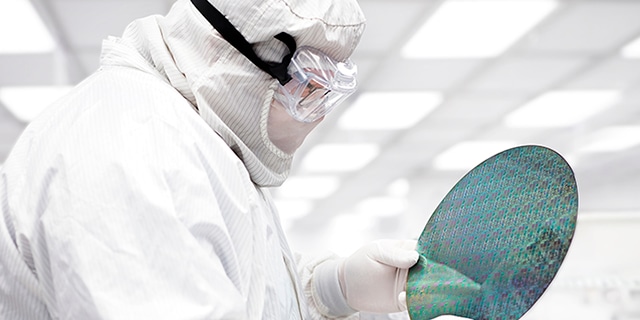
Optimizing Critical Applications to Improve Fab Profitability
Targeting key fluid system applications can reduce risk, control costs, and improve overall fab performance.
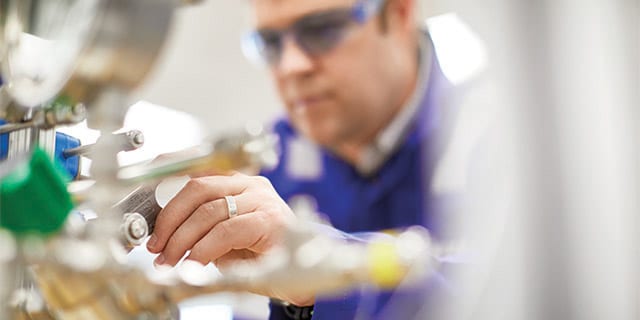
On-Site Engineering Expertise to Support Fab Performance
As fabs scale and standardize, field engineering provides critical expertise to improve efficiency and consistency.