Swagelok® Proportional Safety Relief Valves
PRV series proportional safety relief valves provide over-pressure protection with PED certification.
Connect to Learn MorePRV series proportional safety relief valves are available in five set spring pressure ranges and are factory-set, tested, locked, and tagged to ensure the desired setting. They open gradually as the pressure increases above the set pressure and close when system pressure falls below the set pressure.
In addition, PRV series relief valves are:
- Certified to PED 2014/68/EU Category IV
- CE-marked in accordance with the PED as a safety valve according to ISO-4126-1
Optional end connection adapters provide flexibility for installation in a variety of system setups.
Specifications
| Working Pressures | up to 6000 psig (413 bar) |
| Set Pressure | 145 to 6000 psig (10.0 to 413 bar) |
| Seal Materials | Fluorocarbon FKM and nitrile |
Proportional Safety Relief Valves Catalogs
Locate detailed product information, including materials of construction, pressure and temperature ratings, options, and accessories.
Features: Gas and liquid service; Working pressure: 6000 psig (413 bar); Set pressures from 145 to 6000 psig (10.0 to 413 bar); All 316L stainless steel construction; 1/4 through 1 in. NPT and ISO/BSP parallel thread end connections; Certified to PED 97/23/EC Category IV
Calculate Flow Rate for the Right Valve Selection
Use our valve flow coefficient (Cv) calculator to chose a valve sized correctly for your needs.
Use the ToolSwagelok Resources Curated for You
如何为您的工业流体系统选择合适的阀门
了解如何应用实用的 STAMPED 方法来选择适合您的工业流体或取样系统设计应用的阀门。
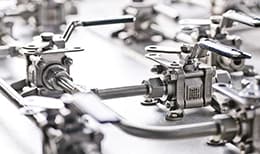
如何使用截止阀隔离工业流体系统
在维护之前,隔离工业流体系统管路对于工厂的安全至关重要。隔离流体系统管路的安全方法之一是安装两个截止阀。了解如何为您的系统设计正确的配置。

Process Measurement – Impulse Line Best Practices
It can be difficult to identify issues within your process instrumentation application if you focus solely on the transmitter. Learn how to solve problems within your process instrumentation line with tips and best practices from Swagelok.
Closing the Manufacturing Skills Gap with a Well-Trained Team
With an aging industrial workforce nearing retirement, manufacturers are turning to younger generations to replace expert knowledge. Learn how to build an effective fluid system training program.